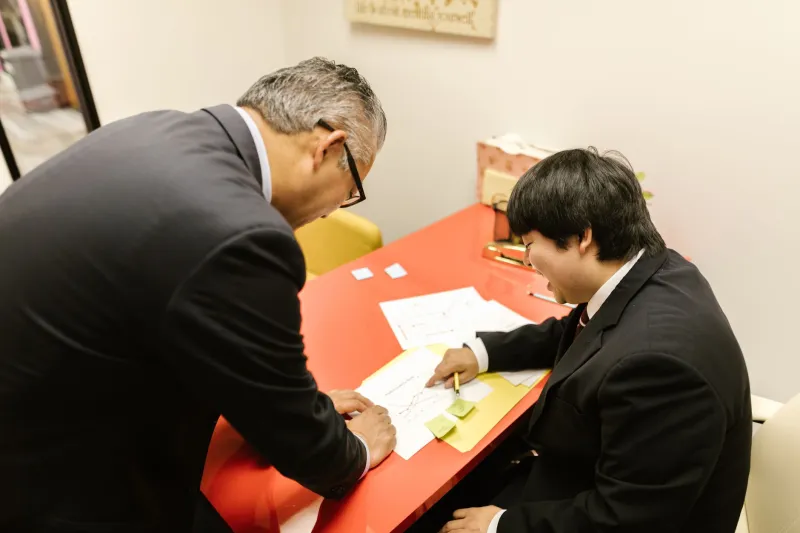
What the Pause Means: Decoding Japanese Business Silence for French-American Entrepreneurs

There is a moment that experienced cross-cultural negotiators know well. A Japanese executive receives a proposal, nods slowly, and says nothing for several seconds. The French-American entrepreneur across the table, accustomed to the rapid verbal sparring that characterizes Parisian boardrooms or New York pitch meetings, rushes to fill the void — restating terms, offering concessions, or worse, interpreting the silence as rejection.
In most cases, the silence meant none of those things.
As Japanese and French businesses continue to find common ground in the American market, the communication gap between their respective negotiation cultures has emerged as one of the most consequential — and least discussed — friction points in binational commerce. For US-based entrepreneurs operating at the intersection of both traditions, understanding this gap is not merely a matter of etiquette. It is a strategic imperative.
The Architecture of Japanese Silence
In Japanese business culture, silence functions as active communication. The concept of ma — roughly translated as negative space or meaningful pause — carries significant weight in professional settings. When a Japanese counterpart falls silent after receiving information, they are typically processing, deliberating, or signaling that a response requires careful consideration. Rushing that silence is not only impolite; it can signal a lack of seriousness.
This stands in notable contrast to French professional communication, which prizes verbal precision, rhetorical confidence, and the willingness to challenge ideas openly. French business culture, particularly among entrepreneurs with ties to Paris or Lyon, tends to interpret extended silence as ambiguity or discomfort — something to be resolved through more words, not fewer.
American entrepreneurs, meanwhile, often occupy an uncomfortable middle position. US business culture generally rewards directness and momentum, making the deliberate, unhurried cadence of Japanese first meetings feel counterintuitive to those trained in American deal-making conventions.
Reading the Room Differently
Beyond silence, Japanese business communication relies heavily on nonverbal signals that carry meaning invisible to those unfamiliar with the cultural context. The angle of a bow, the manner in which a business card is received, the seating arrangement at a meeting table — each of these communicates status, respect, and intent without a single spoken word.
In one illustrative case, a Chicago-based distribution firm with French heritage recounted their initial meetings with a Japanese supplier based in Los Angeles. The American side had prepared a detailed slide presentation and expected a structured Q&A. Instead, the Japanese delegation listened without interruption, asked a single clarifying question, and closed the meeting with a polite expression of interest. The American team left uncertain whether they had succeeded or failed.
Three weeks later, a detailed letter of intent arrived. The Japanese firm had been conducting internal consensus-building — a process known as nemawashi — throughout the intervening period. The meeting itself had been an information-gathering exercise, not a decision-making forum.
The French Counterpoint
French business culture introduces its own set of expectations that can complicate these dynamics further. French entrepreneurs and executives tend to value intellectual debate as a sign of engagement. Disagreement, when framed articulately, is often interpreted as respect rather than hostility. This directness, while refreshing to many American counterparts, can register as confrontational to Japanese business partners who prefer to surface objections through intermediaries or written follow-up rather than face-to-face challenge.
For French-American businesses — particularly those in sectors such as wine, luxury goods, hospitality, or artisanal food production — this creates a layered communication challenge. Maintaining the rhetorical confidence that French brand identity often demands while simultaneously honoring the deliberative pace expected by Japanese partners requires a kind of cultural code-switching that few teams develop naturally.
Practical Guidance for American Entrepreneurs
Several principles have proven effective for US-based entrepreneurs navigating this trilateral communication environment.
Allow silence to complete itself. When a Japanese counterpart pauses after receiving information, resist the instinct to elaborate or reframe. A pause of ten to fifteen seconds is not unusual and should be treated as part of the conversation, not a gap in it.
Prepare written materials with exceptional care. Japanese business culture places considerable weight on documentation. A well-structured written proposal, delivered in advance of a meeting, often carries more persuasive power than an improvised verbal pitch. French-American ventures with strong brand narratives should invest in translating that narrative into precise, formal written communication.
Use intermediaries strategically. In both Japanese and French business traditions, the role of a trusted intermediary — someone who can vouch for a new party's credibility and facilitate introductions — carries significant weight. American entrepreneurs who attempt to enter these relationships without such a bridge often find the process slower and more opaque than necessary.
Separate the meeting from the decision. First meetings in Japanese business culture rarely produce commitments. Treating them as informational rather than transactional allows all parties to engage more honestly and sets realistic expectations for the timeline ahead.
A Convergence Worth Cultivating
Despite these differences, Japanese and French business philosophies share a number of underlying values that make genuine partnership possible. Both cultures prize craftsmanship, long-term relationships over short-term gains, and the kind of institutional trust that takes years to build and moments to destroy. These shared orientations create a foundation on which American entrepreneurs — patient enough to honor the pace of both traditions — can build durable commercial relationships.
The silence across the negotiating table is not empty. For those willing to learn its language, it is among the most informative moments in any first meeting.