Vineyard Estates and Manor Ambitions: Why Japanese Capital Is Flowing Into French-Inspired Wine Country Properties Across the US
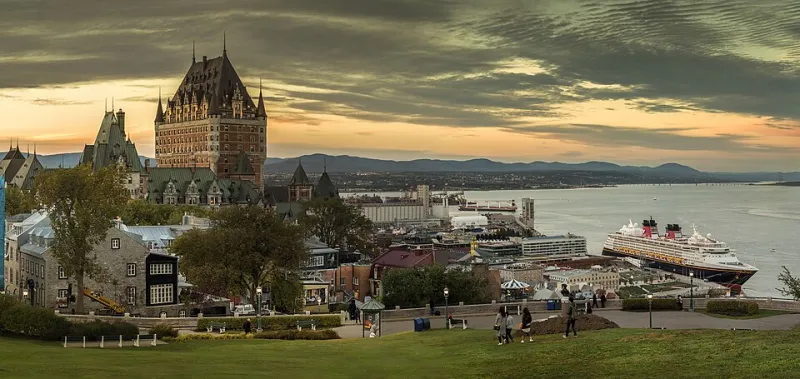
Photo: Wilfredor, CC BY-SA 4.0, via Wikimedia Commons
There is something quietly deliberate about the way Japanese investment capital has been arriving in American wine country. It does not announce itself with dramatic press releases or headline-grabbing auctions. Instead, it materializes through carefully structured holding companies, patient due diligence processes, and a long-term vision that treats a Napa Valley estate or a Willamette Valley manor not merely as a trophy asset, but as the foundation of a multi-decade business platform.
For investors operating at the intersection of Japanese commercial culture and French aesthetic tradition, the appeal of château-inspired properties in the United States is both practical and philosophical. These estates—with their stone facades, formal gardens, barrel-aging cellars, and panoramic vineyard views—evoke the architectural grammar of Burgundy and Bordeaux while sitting within one of the world's most legally accessible real estate markets.
The Draw of French Architectural Heritage on American Soil
The United States has a long tradition of constructing wine estates modeled after French provincial architecture. From the Beaux-Arts grandeur of certain Napa properties to the more restrained Norman farmhouse aesthetic found in parts of Sonoma and the Willamette Valley, these buildings carry a cultural resonance that Japanese investors—many of whom have deep familiarity with French wine culture and luxury hospitality—find particularly compelling.
For Japanese high-net-worth individuals and family offices, the acquisition of such properties represents a convergence of personal affinity and commercial logic. Japan has maintained one of the world's most sophisticated relationships with French wine and gastronomy, and the translation of that appreciation into tangible real estate holdings in the US reflects a broader pattern of cross-cultural business investment that Furansuya Directory has tracked across multiple sectors.
Corporate buyers, particularly those in the hospitality, food and beverage, and luxury retail industries, often approach these acquisitions with an explicit operational mandate: to create venues where Japanese clientele—whether visiting the US or residing here—can engage with premium wine culture in an environment that feels simultaneously European in atmosphere and Japanese in its precision of service.
Financing Structures and Entry Strategies
The mechanics of acquiring vineyard estates in the US involve a distinct set of financial considerations that differ meaningfully from standard commercial real estate transactions. Agricultural land classifications, water rights, and the operational complexity of maintaining productive vineyards introduce layers of due diligence that require specialized legal and financial counsel.
Japanese buyers frequently enter the market through one of three primary structures. The first is direct acquisition via a US-incorporated subsidiary, which provides liability insulation and simplifies ongoing tax reporting obligations. The second is a joint venture arrangement with an existing American winery or hospitality operator, allowing the Japanese partner to acquire an equity stake while benefiting from the local partner's operational expertise and established distribution relationships. The third, increasingly common among family offices, involves the purchase of a non-producing estate that is then converted into a boutique hospitality venue—eliminating the complexities of wine production while retaining the architectural and experiential qualities that make the property commercially valuable.
Financing often draws on a combination of US-based commercial real estate lending and capital repatriated from Japanese institutional sources. Currency considerations play a meaningful role in acquisition timing, and experienced advisors typically recommend hedging strategies that account for yen-dollar fluctuation over the projected holding period.
Regulatory Considerations and Compliance Requirements
Foreign ownership of US agricultural land is subject to reporting requirements under the Agricultural Foreign Investment Disclosure Act (AFIDA), administered by the US Department of Agriculture. Japanese investors and their legal teams must ensure timely filings and maintain accurate records of any changes to ownership structure or land use.
Beyond federal reporting, state-level regulations vary considerably. California's Department of Food and Agriculture and the California Department of Alcoholic Beverage Control impose specific licensing requirements on any property engaged in wine production or direct-to-consumer sales. Oregon maintains similarly detailed oversight through the Oregon Liquor and Cannabis Commission. Navigating these regulatory environments requires local legal expertise and, in many cases, the engagement of compliance consultants who specialize in the intersection of agriculture, hospitality, and alcoholic beverage law.
Visa and immigration considerations also factor into the equation for Japanese owners who intend to maintain a personal presence at their US properties. The EB-5 investor visa program, while not always the optimal pathway for high-net-worth individuals, remains relevant in certain deal structures. More commonly, E-2 treaty investor visas or L-1 intracompany transfer visas are used to facilitate the placement of Japanese management personnel at US-based estate operations.
Business Platforms: Agritourism, Wine Education, and Distribution
What distinguishes the most strategically sophisticated Japanese acquisitions in American wine country is the deliberate layering of revenue-generating activities onto the estate's core real estate value. Rather than treating the property solely as a passive investment, these buyers develop what might be described as a hospitality ecosystem—one that generates income through multiple channels while simultaneously building brand equity.
Agritourism represents one of the most accessible of these channels. California and Oregon both maintain regulatory frameworks that permit vineyard estates to host visitors for tastings, tours, and curated experiences. Japanese operators have shown particular aptitude for designing these experiences with the kind of meticulous attention to guest journey that characterizes premium hospitality in Japan. The result is often a visitor experience that feels distinctly elevated compared to standard American winery tourism—an observation that has not gone unnoticed by domestic travel media.
Wine education programming represents another significant opportunity. Several Japanese-owned estates have developed structured curriculum-based experiences drawing on the pedagogical traditions of French wine education institutions such as the WSET and the Court of Master Sommeliers. These programs serve both the general public and corporate clients seeking premium team-building or client entertainment formats.
Premium product distribution—particularly the importation and on-site retail sale of French wines alongside estate-produced American vintages—rounds out the commercial model. This approach creates a natural commercial bridge between Japanese wine culture, French winemaking heritage, and American consumer markets, embodying the tripartite identity that defines so much of the business activity covered by Furansuya Directory.
A Long-Term Perspective on an Evolving Market
The movement of Japanese capital into French-inspired American vineyard estates is not a speculative trend driven by short-term market dynamics. It reflects a considered, culturally informed investment philosophy that prizes authenticity, longevity, and the careful stewardship of heritage assets. For investors and operators navigating this space, the rewards extend well beyond financial returns—they encompass the creation of enduring institutions that express, in concrete architectural and experiential terms, the unique cultural synthesis at the heart of Japanese-French business engagement in the United States.