Beyond the Boulevard: How Japanese Restraint and French Refinement Are Rewriting Luxury Retail Design in America's Suburbs
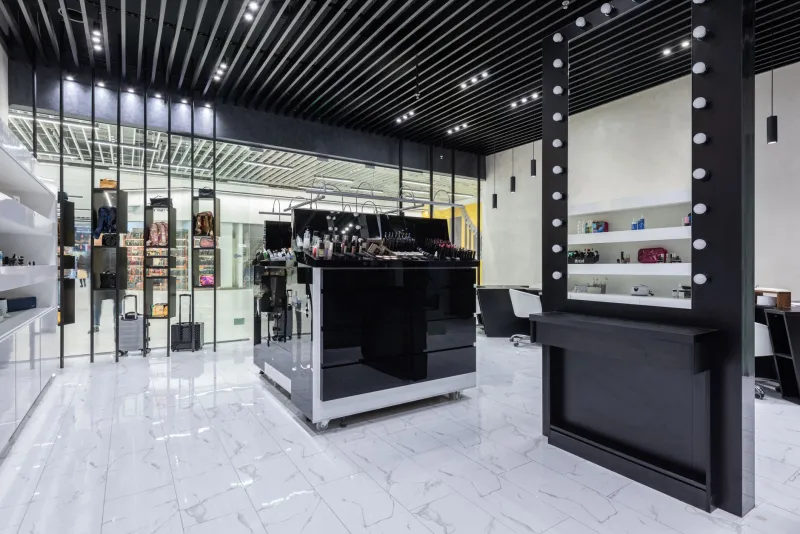
For decades, the prevailing assumption in American retail development held that luxury belonged to the city. Fifth Avenue, Rodeo Drive, the Magnificent Mile — these were the addresses that conferred credibility, and the architectural language of prestige was written entirely in their grammar. That assumption is now under serious revision. Across secondary markets from Scottsdale, Arizona to Westport, Connecticut, a new category of retail environment is taking shape, one that draws its design vocabulary from two of the world's most disciplined aesthetic traditions: Japanese minimalism and French elegance.
The results are neither fusion nor compromise. They are something more considered — spaces in which the Japanese instinct for productive emptiness and the French capacity for refined material storytelling operate in genuine dialogue, producing retail environments that feel simultaneously calm and covetable.
The Suburban Shift and Its Discontents
The migration of luxury retail attention toward suburban and secondary markets accelerated measurably following the disruptions of 2020, when urban foot traffic collapsed and high-net-worth consumers discovered, or rediscovered, the residential appeal of smaller cities and well-resourced suburbs. Developers who had previously dismissed markets like Pasadena, California or Greenwich, Connecticut as peripheral began reassessing their projections.
What they found was a consumer base that had developed sophisticated tastes during years of travel and digital exposure, but had been consistently underserved by the retail environments available to them locally. Strip malls and regional shopping centers, however extensively renovated, carried aesthetic associations that affluent consumers found difficult to reconcile with the products they wished to purchase. The gap between what was being sold and where it was being sold had become commercially consequential.
This is the context in which Japanese-French retail design has found its most receptive audience. Both traditions share a foundational suspicion of excess. Japanese spatial philosophy, rooted in concepts such as ma — the meaningful use of negative space — and wabi-sabi, which finds beauty in restraint and impermanence, produces interiors that communicate confidence without clamor. French retail design, particularly in the luxury sector, has long operated on the principle that a product displayed with care and space commands greater authority than one presented in abundance. The overlap between these philosophies is not superficial; it is structural.
Architecture as Argument
In practice, the convergence of these two traditions produces retail environments with several identifiable characteristics. Circulation paths tend to be deliberate and unhurried, guiding the customer through a curated sequence of encounters rather than exposing them immediately to the full inventory. Material palettes draw on natural substances — pale oak, brushed stone, raw linen, aged brass — applied with a precision that rewards close attention. Lighting is architectural rather than theatrical, used to define zones and surfaces rather than to dramatize individual products.
One instructive example can be found in the boutique operations that several Japanese-owned importers of French artisanal goods have established in suburban lifestyle centers across the Mid-Atlantic and Pacific Northwest. These operators, many of whom are represented in the Furansuya Directory network, have invested significantly in physical environments that communicate their sourcing philosophy before a single product is examined. The store itself functions as an argument — a spatial statement that the goods within have been selected with equivalent care.
In one Bethesda, Maryland location, the interior was designed by a Tokyo-based firm with prior experience in Parisian concept retail. The result is a space in which Japanese joinery techniques are applied to display fixtures that carry an unmistakably French sensibility in their proportions and finish. American consumers entering the space frequently describe a sensation of being in a location that feels both unfamiliar and immediately legible — foreign in its precision, but accessible in its warmth.
The Consumer Psychology of Considered Space
Understanding why this aesthetic resonates in suburban markets requires attention to what it is displacing. The dominant visual language of American suburban retail has historically been one of abundance signaled through volume — wide aisles, dense product presentation, promotional graphics that compete aggressively for attention. This language communicates availability and value in a register that is entirely legible, but it does not communicate selectivity, expertise, or the kind of trust that premium pricing requires.
Japanese-French retail environments operate on an opposite logic. Scarcity of visual information functions as a quality signal. When a display case contains three objects rather than thirty, the implicit message is that each of those three objects has earned its position. When a floor plan allows for genuine pauses — moments in which the customer is not being addressed by merchandise — it communicates that the operator is confident enough in the product to allow silence.
For American consumers in secondary markets who have grown accustomed to traveling to New York or Los Angeles to access this kind of retail experience, encountering it locally produces a meaningful response. It signals that their market has been taken seriously, that an operator has made a genuine investment in their experience rather than adapting an inferior format for a secondary audience.
Operational Implications for Binational Retailers
For Japanese and French businesses considering entry into American suburban retail markets, the design dimension carries operational weight that extends well beyond aesthetics. Staff training in these environments must align with the spatial philosophy; a beautifully restrained interior populated by undertrained or inattentive sales associates produces a dissonance that undermines the entire investment. Japanese service discipline — the attentiveness and anticipatory quality associated with omotenashi — translates particularly well into the slower, more considered customer interactions that these spaces are designed to facilitate.
Inventory management also functions differently in minimalist retail environments. The visible presentation of limited stock requires that back-of-house operations be correspondingly precise. Japanese inventory logic, with its emphasis on just-in-time availability and zero-tolerance for visible disorder, complements the front-of-house aesthetic in ways that are commercially practical as well as philosophically consistent.
French partners in these ventures contribute complementary expertise in the area of product curation and narrative. The French retail tradition has long understood that the story of an object — its provenance, its maker, its relationship to a particular regional or cultural context — constitutes a significant portion of its value. Communicating these narratives in a spatial environment that has been deliberately quieted requires a different kind of storytelling, one that is embedded in the physical presentation rather than delivered through signage or promotional copy.
A New Standard in Unexpected Places
The broader significance of this trend extends beyond the individual boutiques and concept stores currently operating in American suburban markets. It suggests that the geography of luxury retail is genuinely shifting, and that the aesthetic frameworks most capable of supporting that shift are those with the discipline to function outside the conventional urban context.
Japanese minimalism and French elegance share, at their core, a commitment to the idea that quality does not require volume to announce itself. In markets where that idea is still relatively new, it carries considerable competitive force. For operators who understand both traditions and can synthesize them with genuine fluency, the American suburban landscape represents not a compromise but an opportunity — one that is still, in most markets, largely uncontested.


