Sake Meets Bordeaux: Inside the Business of Japanese-French Beverage Bars Reshaping Urban Nightlife
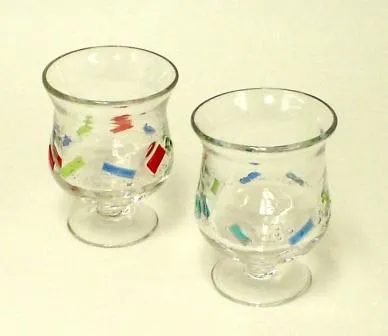
Photo: Ken from Lisle, IL, USA, CC BY 2.0, via Wikimedia Commons
In a narrow storefront in Manhattan's West Village, a sommelier pours a chilled junmai daiginjo alongside a glass of white Burgundy. The pairing is deliberate. The contrast — rice-forward umami against mineral-driven Chardonnay — is precisely the kind of sensory tension that operators of Japanese-French hybrid beverage bars are monetizing with considerable success across major American cities.
These establishments, still rare enough to feel like discoveries, are proliferating in markets where disposable income and cosmopolitan curiosity converge: New York, Los Angeles, Chicago, San Francisco, and Seattle. What began as an experimental concept confined to a handful of high-end omakase counters has evolved into a recognizable — if still niche — business category. And the economics behind it, it turns out, are more compelling than most industry observers initially anticipated.
The Dual-Prestige Proposition
At the heart of this trend lies a straightforward commercial insight: Japanese sake and French wine occupy adjacent positions in the global hierarchy of prestige beverages. Both carry deep cultural narratives. Both command premium pricing. And crucially, both attract a consumer demographic that values authenticity, provenance, and experiential depth over volume consumption.
For entrepreneurs operating at this intersection, the dual-prestige proposition creates a natural pricing umbrella. A curated sake and wine flight in these venues typically retails between $45 and $120 per person — a figure that comfortably exceeds the average check at conventional wine bars while remaining accessible to the urban professional clientele these businesses target.
"We are not selling alcohol," said the operator of a Japanese-French bar in Los Angeles's Arts District who asked to be identified only by his first name, Kenji. "We are selling a conversation between two cultures. Our guests pay for the narrative as much as the liquid."
This framing — beverages as cultural dialogue — is not merely marketing language. It directly informs menu construction, staff training, and the physical design of these spaces, all of which represent meaningful capital expenditures that distinguish this model from a conventional cocktail bar or wine lounge.
Supply Chain Realities: Navigating Two Complex Import Systems
The operational backbone of any Japanese-French beverage concept is its procurement strategy, and here the challenges are considerable. Sake importation into the United States is governed by a patchwork of federal and state regulations administered by the Alcohol and Tobacco Tax and Trade Bureau (TTB), layered atop individual state liquor authority requirements. French wine importation follows a parallel but distinct regulatory path, with its own labeling requirements, appellation verification protocols, and importer relationships.
Operators running dual-culture programs must therefore maintain active relationships with at least two separate import channels — often more, given the regional specificity of premium sake and the appellation diversity of serious French wine programs. This complexity drives up procurement overhead and demands a level of supplier relationship management that smaller operators frequently underestimate.
Distribution is an additional friction point. While major French wine importers such as Kermit Lynch Wine Merchant and Louis/Dressner Selections have well-established national networks, the American sake distribution infrastructure remains comparatively fragmented. Several operators interviewed for this article cited the difficulty of sourcing specific small-brewery sakes outside of California and New York as a persistent constraint on menu ambition.
Cold-chain logistics compound the issue further. Premium ginjo and daiginjo sakes are temperature-sensitive in ways that require refrigerated storage from the moment they leave the brewery. Establishing a reliable cold chain from Japanese producers to American storefronts adds measurable cost to landed bottle prices — a cost that must ultimately be absorbed by the margin structure or passed to consumers through pricing.
Consumer Psychology and the Role of Education
One of the more underappreciated drivers of profitability in this segment is the role of consumer education as a revenue mechanism. Unlike conventional wine bars, where guests arrive with established preferences and vocabulary, Japanese-French fusion beverage venues frequently serve customers who are fluent in one tradition but novice in the other.
This asymmetry is commercially useful. Operators who invest in structured tasting experiences — guided flights, pairing menus with detailed tasting notes, and staff trained to narrate the cultural context of each selection — report significantly higher average checks than those who present their offerings in a conventional menu format. The guided experience, in effect, converts educational engagement into incremental revenue.
Several venues have formalized this model through ticketed tasting events, sake certification workshops, and private dining programs that carry fixed per-head pricing. These structured offerings reduce revenue volatility relative to à la carte service and create a recurring customer relationship that supports membership and loyalty programs.
"Once a guest understands why a Yamagata junmai pairs beautifully with a Loire Valley Muscadet, they become an evangelist," noted a certified sake sommelier — a Sake Service Institute qualification — who consults for multiple establishments in the Chicago market. "That word-of-mouth acquisition cost is effectively zero."
Profitability Metrics: What the Numbers Suggest
While precise financial disclosures from privately held establishments are unavailable, conversations with operators and industry consultants suggest that well-run Japanese-French beverage concepts can achieve beverage gross margins in the 68–75 percent range — broadly comparable to premium wine bars but with a higher average transaction value that amplifies the absolute margin per cover.
Labor costs, however, are elevated relative to conventional bar operations. Staff capable of fluently navigating both sake and French wine service are a specialized talent pool, and compensation expectations reflect that scarcity. Several operators noted that recruiting certified sake advisors with concurrent wine credentials requires salaries that exceed typical beverage director benchmarks in comparable markets.
Real estate positioning also matters significantly. These concepts perform best in neighborhoods with demonstrated fine-dining density, where foot traffic skews toward consumers already primed for premium beverage spending. Venues that have attempted to pioneer this format in emerging or transitional neighborhoods report longer ramp-up periods and higher marketing expenditures to build awareness.
An Emerging Category Worth Watching
The Japanese-French beverage fusion bar remains a niche within a niche — but the directional indicators are encouraging for entrepreneurs considering entry. American consumer interest in Japanese culture and cuisine continues to expand well beyond coastal metros. French wine consumption in the United States has held resilient even amid broader premiumization trends in the spirits category. And the experiential dining and drinking economy, temporarily disrupted by the pandemic years, has reasserted itself with notable vigor among the demographic cohort these venues serve.
For the Furansuya Directory's readership — entrepreneurs, investors, and business operators navigating the intersection of Japanese and French commercial culture in America — this segment warrants close attention. The operators who succeed will be those who treat the beverage program not as a product but as a platform: a curated experience that translates two distinct cultural traditions into a format that American consumers find both accessible and aspirational.
The economics, when the model is executed with precision, are quietly compelling.