The Guild Model Reborn: How Japanese Businesses in the US Are Drawing on French Apprenticeship Traditions to Build World-Class Workforces
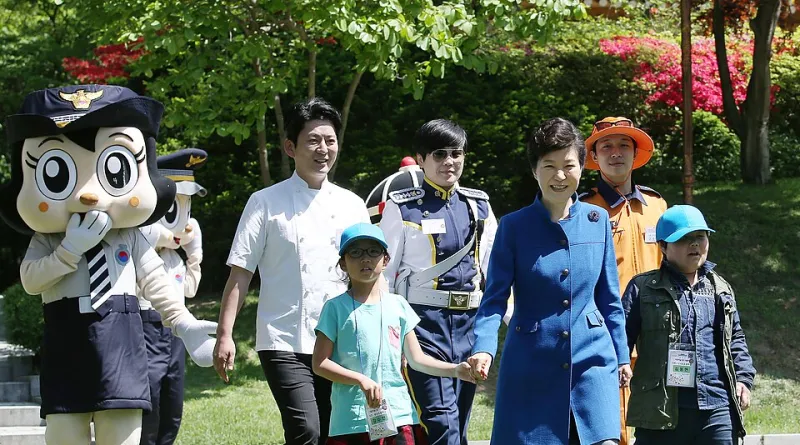
Photo: Republic of Korea, CC BY-SA 2.0, via Wikimedia Commons
The French compagnonnage system—a centuries-old network of artisan guilds that trained craftspeople through years of itinerant apprenticeship under master practitioners—was formally recognized by UNESCO as an element of the Intangible Cultural Heritage of Humanity in 2010. It is, by almost any measure, one of the most sophisticated workforce development models ever devised. And it is quietly finding new expression in an unexpected setting: the American operations of Japanese companies working at the intersection of hospitality, luxury production, and artisanal craft.
For businesses listed in Furansuya Directory and operating across the Japanese-French-American commercial corridor, the adoption of guild-inspired training frameworks is not an exercise in nostalgia. It is a deliberate strategic response to a specific and persistent challenge: how do you build and retain a workforce capable of delivering the kind of exceptional, culturally nuanced output that commands premium pricing in the US market—when the American labor market offers no established pipeline for developing that kind of talent?
Why Conventional US Vocational Training Falls Short
The United States maintains a broad network of vocational and technical training institutions, community colleges, and culinary schools. Programs affiliated with the American Culinary Federation, the National Restaurant Association Educational Foundation, and various state-level apprenticeship registries provide legitimate credentials and practical skills to hundreds of thousands of workers annually.
Yet for Japanese operators in premium hospitality and artisanal sectors, these programs present a fundamental mismatch. Standard US culinary education, for example, is designed to produce competent, versatile kitchen professionals who can function effectively across a range of commercial kitchen environments. It is not designed to produce practitioners of kaiseki discipline, Japanese-French fusion technique, or the kind of hyperspecialized craft knowledge that defines a luxury product's identity and justifies its price point.
The gap is not a criticism of American vocational education—it is simply a reflection of market design. US training systems optimize for breadth and employability across a wide range of employers. The guild model, by contrast, optimizes for depth, mastery, and cultural transmission within a specific tradition. For Japanese businesses whose competitive advantage depends on the latter, the former is structurally insufficient.
The French Guild Framework and Its Japanese Interpretation
The original French guild system operated on several principles that remain instructive today: the relationship between maître and apprenti was personal and long-term; progression through ranks was earned through demonstrated mastery rather than time served; and the transmission of knowledge was understood as both a professional obligation and a cultural responsibility.
Japanese professional culture has its own deeply embedded equivalents. The concept of shokunin—the artisan or craftsperson who dedicates a lifetime to the perfection of a single discipline—resonates closely with the compagnon ideal. The senpai-kōhai (senior-junior) relationship that structures professional development in Japanese organizations mirrors the mentorship hierarchy of the guild. And the Japanese emphasis on kata—the precise, repeated practice of established forms as the foundation for eventual improvisation and mastery—parallels the guild's insistence on rigorous foundational training before creative expression is permitted.
When Japanese operators in the US design training programs modeled on French guild principles, they are therefore not importing a foreign system wholesale. They are recognizing structural parallels between two cultures that have independently arrived at similar conclusions about how mastery is developed and transmitted—and building a hybrid framework that draws on the strengths of both.
Program Structures in Practice
Several Japanese-affiliated hospitality and artisanal businesses operating in major US markets have developed formal training programs that embody this synthesis. While the specifics vary by industry and company, common structural elements emerge.
Multi-Year Cohort Enrollment: Rather than hiring employees for immediate deployment, these programs recruit trainees—often recent graduates of culinary schools, design programs, or hospitality management degrees—into structured multi-year tracks. Cohort sizes are deliberately small, typically between four and twelve participants, to preserve the intensity of the mentorship relationship.
Rotation Through Functional Disciplines: Borrowing from the compagnonnage tradition of the Tour de France—in which apprentice craftspeople traveled from city to city to study under different masters—some programs rotate trainees through multiple departments, partner establishments, or even international locations. A trainee in a Japanese-owned French-American hospitality group might spend time in the kitchen, on the floor, in the wine program, and at a partner property in Japan or France before completing their foundational training.
Master Practitioner Mentorship: Each trainee is assigned to a senior practitioner—typically a chef, sommelier, artisan, or operational specialist—who assumes personal responsibility for that trainee's development. This relationship is formalized through regular evaluation sessions and documented skill assessments, but its effectiveness depends on the quality of the interpersonal bond and the mentor's genuine investment in the trainee's progress.
Credentialing and Rank Progression: Completion of program milestones is marked by formal recognition—sometimes a ceremony, sometimes a documented credential, always a meaningful professional acknowledgment. This practice, drawn from both French guild tradition and Japanese professional culture, reinforces the gravity of skill acquisition and creates tangible markers of advancement that motivate sustained engagement.
Measuring Competitive Advantage
The business case for investing in this level of training infrastructure is not immediately obvious to observers accustomed to US labor market norms, where employee turnover is high and training investments are frequently lost when workers move to competitors. Japanese operators have addressed this challenge through a combination of compensation structures, cultural onboarding, and career pathway clarity that makes long-term commitment genuinely attractive to talented individuals.
The results, where they have been systematically tracked, are compelling. Properties and production facilities operating with guild-model training programs consistently report lower voluntary turnover among program graduates compared to industry benchmarks. Guest satisfaction scores at hospitality venues with these programs in place tend to outperform comparable properties staffed through conventional hiring and training approaches. And in artisanal production contexts, the consistency and quality metrics that define premium product positioning are more reliably maintained when the workforce has been developed through deep, relationship-based training rather than standardized procedural instruction.
Implications for the Broader Market
The emergence of French guild-inspired training programs within Japanese-operated US businesses carries implications that extend beyond the individual companies involved. As these programs mature and their graduates move into senior roles—some within the originating organizations, others eventually launching their own ventures—they create a diffuse network of highly trained practitioners who carry a distinctive professional culture into the wider American market.
This is precisely how the original guild system shaped European craft traditions over centuries: not through centralized control, but through the gradual distribution of a shared standard of excellence across a professional community. That the same dynamic is now playing out, in adapted form, within the Japanese-French business ecosystem in the United States is a development worth watching closely—and one that Furansuya Directory will continue to document as it unfolds.