Overlooked and Underpriced: How Japanese Capital Is Quietly Cornering French-Heritage Real Estate in America's Tier-2 Cities
A Different Kind of Arbitrage
In real estate investment, the most durable returns rarely come from the most obvious markets. While institutional capital continues to pile into Manhattan, Los Angeles, and Miami, a quieter—and arguably more sophisticated—movement is unfolding across the American interior. Japanese investment firms, family offices, and binational joint ventures are systematically identifying French-heritage properties in tier-2 and tier-3 American cities, acquiring assets that the broader market has not yet priced correctly.
This is not speculative opportunism. It is the product of careful research, cultural literacy, and a long-term investment horizon that aligns naturally with the patient capital philosophy common among Japanese institutional investors. For businesses and investors tracking the French-Japanese commercial corridor in the United States, this trend represents one of the more consequential real estate stories of the current decade.
The French Footprint in American Secondary Markets
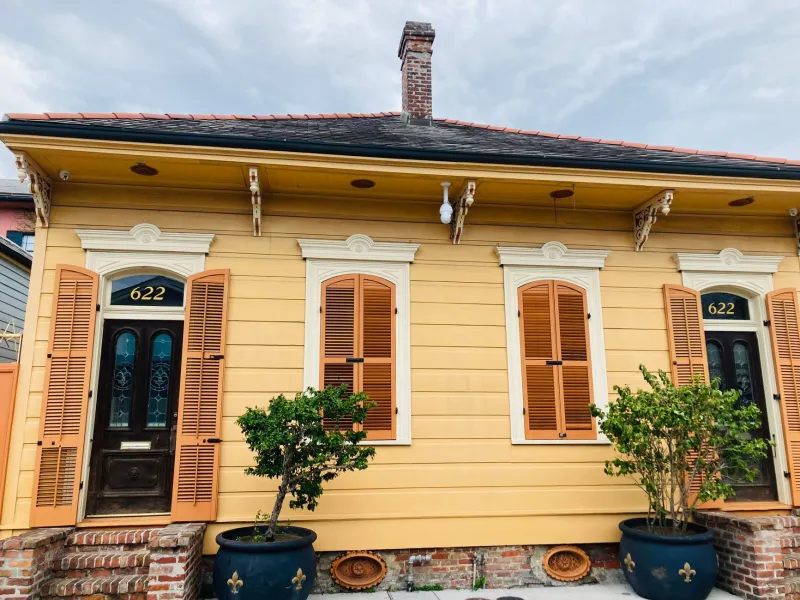
To understand the opportunity, one must first appreciate how extensively French culture shaped the American landscape—well beyond the well-documented case of Louisiana. French colonial and Creole architectural traditions left lasting imprints on cities including Mobile, Alabama; Biloxi, Mississippi; St. Louis, Missouri; and the bayou communities stretching across south-central Louisiana. In many of these locations, historic commercial buildings, residential estates, and mixed-use properties retain genuine French architectural character: wrought-iron balconies, courtyard layouts, stucco facades, and the kind of proportional elegance that European-trained architects encoded into their designs centuries ago.
For Japanese investors with direct experience in French commercial aesthetics—whether through business operations in France, partnerships with French brands, or cultural exposure through Japan's longstanding admiration of French design—these properties are immediately legible in a way that they may not be for purely domestic American buyers. That legibility translates into valuation confidence, which in turn enables faster and more decisive acquisition decisions.
Site Selection: The Methodology Behind the Movement
Japanese firms engaged in this space are not simply browsing MLS listings. Their site selection processes are structured, multi-variable, and informed by both quantitative and qualitative criteria.
On the quantitative side, analysts are tracking price-per-square-foot differentials between French-heritage districts and comparable historic districts in primary markets, vacancy rates in commercial corridors, municipal investment in historic preservation, and tourism infrastructure metrics. New Orleans' Marigny neighborhood, for example, has seen sustained interest from Japanese-backed buyers who identified the gap between its cultural density and its commercial property pricing several years before mainstream media began covering the city's post-pandemic recovery.
On the qualitative side, the evaluation process involves assessing architectural integrity, the coherence of surrounding streetscapes, local regulatory environments for renovation and adaptive reuse, and the depth of existing French cultural institutions—restaurants, cultural organizations, language communities—that could anchor future commercial tenants or hospitality concepts.
Lafayette, Louisiana, presents a particularly instructive case. The city's Cajun French heritage is not merely decorative; it is embedded in the local economy through food culture, music, and a civic identity that actively sustains French-language traditions. Japanese investors who have identified Lafayette as a priority market are not simply buying buildings—they are buying into a living cultural ecosystem that provides natural commercial demand for French-adjacent hospitality and retail concepts.
Financing Structures in Cross-Border Acquisitions
The financing of these acquisitions reflects the sophistication of the investors involved. Several common structures have emerged in the French-Japanese real estate space within the US.
Joint ventures between Japanese family offices and American-based French-heritage community development entities have proven effective, particularly in markets where local relationships and regulatory navigation are essential. These structures allow Japanese capital to benefit from local expertise while retaining meaningful equity positions.
Historic tax credits represent another significant financing lever. The Federal Historic Tax Credit program, which provides a 20 percent credit for the rehabilitation of certified historic structures, is particularly relevant in French-heritage markets where a high proportion of target properties qualify. Japanese investors working with experienced US tax advisors have been able to structure acquisitions that substantially reduce effective acquisition and renovation costs through credit syndication.
Some larger transactions have also involved New Market Tax Credits, applicable in designated low-income census tracts—a category that encompasses several underinvested French-heritage commercial districts in Louisiana and along the Gulf Coast. The combination of historic and new market credits can dramatically alter the economics of what might otherwise appear to be marginal deals.
Cultural Fluency as Competitive Advantage
Perhaps the least quantifiable but most consequential advantage Japanese investors bring to this space is genuine cultural familiarity with French aesthetics and commercial traditions. Japan's relationship with French culture—spanning cuisine, fashion, architecture, and design philosophy—is among the deepest of any non-Western nation. Japanese consumers, executives, and investors have engaged seriously with French cultural production for well over a century, and that engagement has produced a level of informed appreciation that is rare among buyers approaching French-heritage American properties from a purely financial standpoint.
This matters in practical terms. An investor who understands the difference between authentic Creole cottage construction and a superficial period revival is better positioned to assess renovation costs, preservation requirements, and long-term asset integrity. An investor familiar with French hospitality culture is better equipped to evaluate what tenant mix will sustain a French Quarter commercial property over a twenty-year horizon.
Furansuya Directory has observed, through its coverage of the French-Japanese business community in the US, that this cultural fluency frequently accelerates deal timelines. Sellers and local brokers in French-heritage markets often respond positively to buyers who demonstrate genuine knowledge of and respect for the architectural and cultural legacy embedded in the properties they are acquiring.
What Comes Next
The arbitrage window in French-heritage secondary markets will not remain open indefinitely. As domestic institutional investors and real estate private equity firms sharpen their focus on overlooked historic districts—a trend already visible in several Sun Belt markets—the pricing gaps that currently favor well-positioned Japanese buyers will begin to compress.
The firms that move decisively in the near term, building portfolios in markets like New Orleans, Lafayette, Natchitoches, and Mobile before broader market correction, stand to benefit not only from asset appreciation but from first-mover advantages in establishing French-Japanese commercial ecosystems within these communities. Those ecosystems—combining Japanese operational discipline with French cultural heritage—may ultimately prove more durable than the initial real estate play itself.
For investors, advisors, and business operators tracking opportunities at the intersection of Japanese capital and French-American heritage, the current moment warrants close attention. The buildings are there. The cultural logic is sound. The financing tools are available. What remains is the willingness to look beyond the obvious markets and recognize value where others have not yet thought to search.