Where Stillness Sells: How Japanese Design Thinking Is Redefining French Luxury Hospitality Across the US
For much of the twentieth century, French luxury hospitality in America spoke a particular visual language: gilded moldings, velvet upholstery, layered drapery, and a general abundance that signaled prestige through accumulation. That grammar is being quietly rewritten. Across cities from New York to San Francisco to Nashville, a growing cohort of Japanese investors, interior architects, and hospitality operators is introducing a counter-vocabulary—one rooted in restraint, materiality, and what might loosely be called the discipline of the essential.
The results are drawing attention not only from design critics but from a highly specific and commercially significant segment of the American traveler: the affluent, internationally experienced guest who has grown weary of maximalism and is willing to pay a premium for curated calm.
The Design Principles at Work
To understand this trend, it helps to distinguish between two overlapping but distinct Japanese design philosophies that are shaping these spaces. The first is ma, the Japanese concept of negative space—the idea that what is absent in a room is as meaningful as what is present. The second is wabi-sabi, a worldview that finds beauty in imperfection, transience, and the honest expression of natural materials.
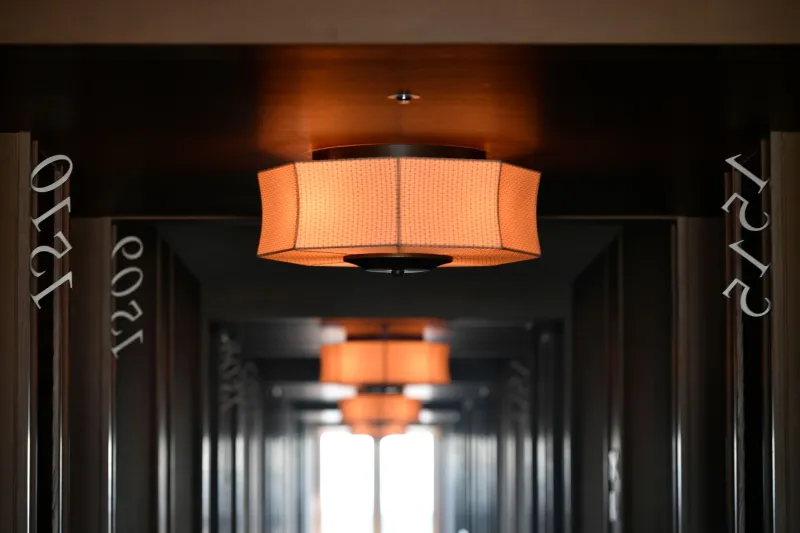
Applied to a French luxury context, these principles produce interiors that retain the structural elegance and proportion associated with French classical design while stripping away decorative excess. Stone walls are left partially raw rather than plastered smooth. Linen is chosen over silk. Lighting is low and directional rather than chandelier-bright. The effect is not austerity—it is precision.
Japanese design firms operating in the US market have been particularly adept at translating this sensibility into hospitality environments without erasing the French identity of the property. Rather than replacing one culture's aesthetic with another's, the most successful projects achieve a genuine synthesis: French architectural bones inhabited by Japanese spatial logic.
Case Studies in Cross-Cultural Hospitality
In the Hudson Valley of New York State, a boutique inn originally conceived as a French country retreat underwent a significant redesign following its acquisition by a Tokyo-based hospitality group. The firm retained the property's stone farmhouse exterior, its French oak flooring, and the regional wine program that had defined its culinary identity. What changed was everything interior: the furniture was reduced to a handful of carefully selected pieces, raw linen replaced patterned wallpaper, and a central courtyard garden was redesigned along the lines of a Japanese karesansui—a dry landscape that encourages contemplation rather than activity.
Occupancy rates at the property increased substantially in the first full year following the redesign, and average nightly rates rose in parallel. Guest reviews consistently cited the sense of calm and intentionality as distinguishing features.
A comparable dynamic has emerged in San Francisco's dining scene, where a French-Japanese restaurant group has opened two properties that apply similar principles to the table experience. The dining rooms are sparse by conventional fine-dining standards—no tablecloths, no floral arrangements, no ambient music above a whisper—yet every surface material has been selected with an almost forensic attention to texture and warmth. The menu itself reflects the same philosophy: French technique applied to a tightly edited selection of seasonal ingredients, with Japanese precision governing execution and plating.
In Chicago, a Japanese real estate investment firm recently completed a full renovation of a historic French-style boutique hotel in the River North neighborhood. The project preserved the building's Haussmann-influenced façade while gutting the interior to create guest rooms that prioritize volume, natural light, and a near-total absence of decorative clutter. Each room features a single piece of handcrafted furniture—a writing desk produced by a Japanese artisan using French walnut—alongside bedding sourced from a Kyoto textile house. The hotel has since been recognized by several travel publications as among the most distinctive new properties in the Midwest.
Why the American Market Is Receptive
The commercial success of these projects reflects something significant about the current preferences of high-net-worth American travelers. A demographic that has spent decades consuming luxury through the lens of abundance is increasingly drawn to experiences that offer complexity without clutter—spaces that feel considered rather than crowded.
Market research consistently shows that this segment places high value on authenticity, craftsmanship, and what might be described as narrative coherence: the sense that every element of a space belongs there for a reason. Japanese design philosophy, with its insistence on intentionality, maps onto these preferences with unusual precision. When layered over a French hospitality framework that already commands cultural prestige in the American imagination, the combination proves to be a powerful commercial proposition.
There is also a generational dimension. Younger affluent travelers—particularly those in the 35-to-55 demographic that now drives significant spending in the luxury hospitality sector—have been exposed to Japanese design aesthetics through architecture, product design, and fashion in ways that older generations were not. For this cohort, the vocabulary of wabi-sabi and ma is not exotic; it is aspirational.
Operational Implications for Investors and Operators
For Japanese businesses and investors considering entry into the US hospitality market through a French-influenced lens, the design dimension carries real operational weight. The minimalist aesthetic that defines these properties is not simply a matter of removing furniture—it requires a higher baseline investment in the quality of individual materials and a more rigorous curation process at every stage of the design and procurement chain.
Japanese design firms with US hospitality experience note that the per-square-foot cost of executing a high-quality minimalist interior frequently exceeds that of a conventionally furnished luxury space, precisely because every surface and object must be able to bear greater scrutiny. There is no decorative noise to absorb imperfection.
At the same time, the operational efficiencies that Japanese management philosophy brings to these properties—lean staffing models, rigorous quality protocols, and a culture of continuous incremental improvement—tend to offset higher upfront design costs over time. Several operators in this space have noted that the reduced physical complexity of minimalist interiors also simplifies housekeeping and maintenance, contributing to improved margins at scale.
A New Standard Taking Shape
What is emerging across these properties is not a trend in the conventional hospitality-industry sense—a surface style that will cycle out within a few seasons. It is, rather, the early articulation of a genuinely new standard for luxury hospitality in the American market: one that draws its authority from two of the world's most respected design and culinary traditions, and that offers guests an experience defined by depth rather than display.
For investors and operators positioned at the intersection of Japanese capital and French cultural heritage, the opportunity is substantial. The American luxury traveler is not simply seeking comfort—they are seeking meaning. In the collaboration between Japanese spatial philosophy and French elegance, there is a compelling answer to that search.