Trust Before Transaction: How Japanese Importers Are Rewiring French Wine Broker Networks Across the United States
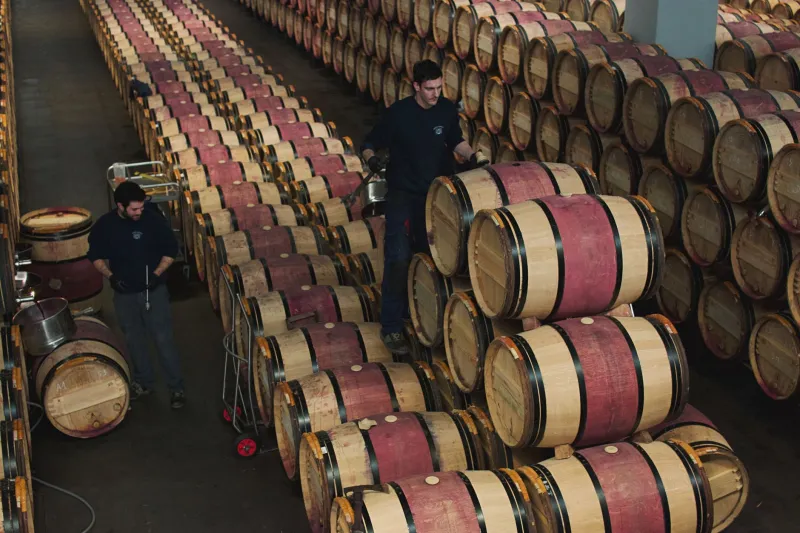
The French wine trade has long operated on a set of invisible rules. Allocations flow through personal connections. Premier cru access is granted to those who have earned it over years of demonstrated loyalty. Négociants and courtiers—the brokers who move wine between châteaux and the international market—guard their relationships with the jealousy of medieval guilds. For decades, American buyers navigated this system by leaning on established European intermediaries or simply paying premiums to access the right bottles.
That dynamic is shifting. Quietly, and with characteristic deliberateness, Japanese importers operating in the United States have begun building their own positions within French wine broker networks—not by disrupting the existing hierarchy, but by earning entry through the one currency the French wine world has always respected most: time and genuine regard.
A Different Kind of Opening Move
Where American wine buyers have traditionally led with price points and volume commitments, Japanese importers tend to open with something less tangible. They ask questions. They learn the history of the domaine. They send handwritten notes after visits to Burgundy or the Loire Valley. They remember the names of the winemaker's children.
This is not theater. It reflects a deeply ingrained business philosophy rooted in the concept of ningenkankei—human relationship—which holds that sustainable commerce is inseparable from genuine mutual understanding. Before any contract is signed, before any allocation is discussed, the relationship itself must be cultivated with patience and sincerity.
For French wine families, many of whom have spent generations navigating the advances of foreign buyers who arrive with spreadsheets and depart with disappointments, this approach resonates in unexpected ways. The French viticultural tradition, particularly in regions like Burgundy and Champagne, is itself built on the long view. Vines planted by a grandfather are tended by grandchildren. Vintages are discussed in decades, not quarters. A buyer who arrives with patience rather than urgency is, in the language of the domaine, already speaking the right dialect.
How This Plays Out in American Distribution
The practical consequences of this cultural alignment are becoming visible across US wine distribution corridors. In markets like New York, Chicago, and Los Angeles—where French wine commands significant shelf presence and restaurant placement—Japanese-affiliated importers have begun securing allocations of small-production wines that were previously inaccessible to American buyers without European intermediary relationships.
One pattern that industry observers note is the willingness of Japanese importers to absorb short-term commercial inconvenience in exchange for long-term positioning. This might mean accepting a difficult vintage without complaint, or agreeing to distribute a lesser-known appellation alongside the flagship label as a gesture of support. In traditional American broker logic, such concessions represent margin erosion. In Japanese commercial thinking, they represent investment in relational capital—an asset that compounds over time.
This willingness to absorb friction has earned Japanese importers a reputation among French wine families for reliability that transcends the transactional. When an allocation decision must be made between a buyer who has been consistently present and supportive and one who appears only in strong vintage years, the outcome is rarely difficult to predict.
The Pressure on Traditional Broker Models
The emergence of Japanese importers as trusted partners within French wine networks is beginning to exert pressure on the traditional broker architecture. American and European intermediaries who have historically charged for their access and relationships are finding that some of those relationships have been quietly rerouted.
This is not a hostile takeover. It is something more gradual and, in some ways, more permanent. When a French domaine develops a direct relationship of trust with a Japanese importer who has demonstrated years of consistent, respectful engagement, the need for a third-party broker diminishes organically. The intermediary's value proposition—access and translation, in both linguistic and cultural senses—is absorbed by the importer who has done the relational work directly.
Some traditional brokers have responded by studying the methods being employed by their Japanese counterparts. There is growing interest among American wine trade professionals in what might broadly be called the relationship-first model: slowing down the initial stages of a commercial relationship, investing in genuine knowledge of the producer's history and philosophy, and communicating in ways that signal respect rather than urgency.
Whether this cultural borrowing can be successfully executed by professionals who were trained in a fundamentally different commercial tradition remains an open question. Relationship-building of the kind practiced by Japanese importers is not a technique that can be applied selectively. It is an expression of values, and its credibility depends on its consistency.
Implications for the Broader French-Japanese Commercial Ecosystem
The French wine broker story is, in many respects, a microcosm of a larger phenomenon unfolding across the French-Japanese commercial landscape in America. Industries as varied as luxury goods, fine dining, and specialty food distribution are witnessing similar dynamics: Japanese operators earning access and trust through patience and cultural attentiveness, and in doing so, altering the competitive geometry of their respective sectors.
For businesses operating at the intersection of French and Japanese commercial culture in the United States—whether as importers, distributors, brokers, or advisors—the wine sector offers instructive lessons. The most durable market positions are often those built not on price advantage or product differentiation alone, but on the kind of trust that accumulates through consistent, unhurried engagement.
The French wine world, for all its complexity, has always understood this. It took a cultural tradition from the other side of the world to remind the American market of it.
What This Means for US Wine Buyers and Retailers
For American retailers, sommeliers, and restaurateurs seeking access to small-production French wines, the rise of Japanese importers as trusted intermediaries presents a practical opportunity. These importers often carry allocations that are genuinely difficult to source through conventional channels, and their relationships with producers tend to be more stable and more transparent than those maintained through multi-layered broker arrangements.
Engaging with Japanese importers also means engaging with a service philosophy that tends toward thoroughness and follow-through. Orders are fulfilled with precision. Communication is prompt and detailed. Provenance documentation is treated with the same seriousness applied to the wine itself.
For US businesses looking to build durable partnerships within the French wine supply chain, understanding the relational logic that Japanese importers have mastered is not merely an academic exercise. It is, increasingly, a competitive necessity.