Less Is More Profitable: How Japanese Spatial Philosophy Is Transforming French Pâtisserie Design Across the US
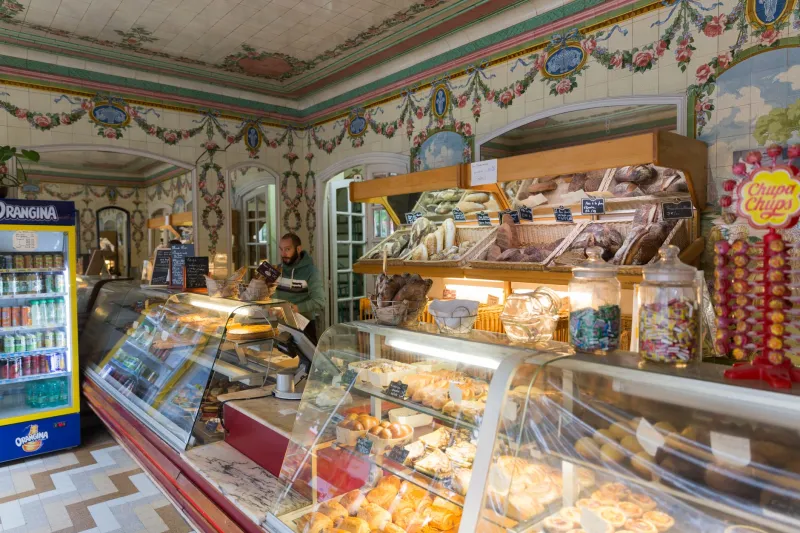
Walk into a conventionally styled French pâtisserie in America and the experience is immediate and familiar: gilded signage, tiered glass displays crowded with jewel-toned confections, walls adorned with Parisian streetscape photography, and a general abundance that signals celebration and indulgence. Walk instead into a new wave of French pastry shops operating in cities like Los Angeles, Seattle, Chicago, and New York, and the sensation is strikingly different. The space breathes. Surfaces are pale and deliberate. A single tart rests on a ceramic stand as though it were an artifact in a gallery. The scent of butter and vanilla drifts through a room that seems, paradoxically, to say very little—and yet communicates everything.
This transformation has a clear origin point. Japanese investors, entrepreneurs, and design consultants working within the French-Japanese business corridor in the US are importing a spatial philosophy that has long governed retail and hospitality aesthetics in Japan: the principle of ma (間), or meaningful negative space, combined with the material consciousness of wabi-sabi and the functional clarity of Japanese minimalism. Applied to the French pâtisserie format, the results are commercially compelling in ways that go well beyond visual preference.
The Business Case for Restraint
At its core, the decision to strip a retail space of visual noise is not purely philosophical—it is strategic. Research in consumer psychology consistently demonstrates that perceived scarcity elevates perceived value. When a display case holds six pastries instead of sixty, each item commands greater attention and, critically, justifies a higher price point. This principle aligns naturally with the Japanese retail concept of shokunin craftsmanship—the idea that a single, perfected object deserves space and reverence. French pastry, with its emphasis on technical precision and ingredient provenance, maps onto this framework with surprising ease.
Operators who have adopted this hybrid model report measurable outcomes. A pâtisserie in West Hollywood that redesigned its interior in collaboration with a Kyoto-based spatial design firm saw average transaction values increase by approximately 22 percent within the first two quarters following the renovation. The shop reduced its display inventory by nearly half, introduced unfinished oak shelving, matte ceramic serving vessels, and a monochromatic color palette anchored by off-white and warm grey. The effect, according to the owner, was that customers began treating their purchase decisions with greater deliberateness—spending more time, asking more questions, and ultimately spending more money per visit.
Instagram as Infrastructure
In the current American retail environment, the visual coherence of a physical space functions as marketing infrastructure. A pâtisserie that photographs well is a pâtisserie that acquires customers at lower cost. Japanese-influenced design, with its clean sightlines, controlled lighting, and considered material palette, generates the kind of uncluttered imagery that performs strongly across social platforms. A single croissant resting on a pale stone surface against a white wall is, algorithmically speaking, a more shareable image than a crowded display case, however abundant and impressive.
Several French-Japanese pâtisserie ventures operating in the US have built their initial customer acquisition strategy almost entirely around this dynamic. One Chicago-based operation, co-founded by a French pastry chef and a Japanese business partner with a background in retail brand development, invested disproportionately in the spatial design of their first location—allocating nearly 40 percent of their launch budget to interior architecture—on the explicit rationale that the space would function as a continuous content generator. Within six months of opening, the shop's Instagram account had accumulated a following that translated directly into consistent foot traffic from customers who had never previously visited the neighborhood.
Maintaining Culinary Authenticity Within a Minimalist Frame
One of the more nuanced challenges facing operators in this space is the question of cultural integrity. French pastry carries its own identity—its history, its technique, its vocabulary of flavor and form. There is a legitimate concern that radical aesthetic simplification could strip the product of its cultural context, reducing a pain au chocolat to a design object and losing the warmth and conviviality that define the French café tradition.
The most successful examples of this hybrid model have resolved this tension through careful layering. Japanese minimalism governs the architecture and display philosophy, while French identity is preserved through culinary language, staff training, and the tactile details of service. Handwritten menu cards in French, the ritual of careful box-wrapping, the deliberate use of French ceramic and linen suppliers for tableware—these elements maintain cultural authenticity without requiring visual maximalism. The Japanese design sensibility provides the frame; the French pastry tradition provides the content.
This approach also reflects a broader principle well understood within Japanese retail culture: that restraint in presentation is itself a form of respect for the product. A beautifully made tarte aux framboises does not require decorative noise to communicate its quality. The space around it does the work.
Regional Variations and Market Sensitivity
Not every American market receives this aesthetic with equal enthusiasm. In cities with established French cultural infrastructure—New York, San Francisco, New Orleans—consumers may arrive with fixed expectations about what a French pâtisserie should look and feel like. Operators in these markets have found it necessary to introduce Japanese design elements more gradually, preserving certain familiar visual cues while incrementally shifting the spatial language toward greater restraint.
In contrast, markets with less established French pastry culture—cities like Nashville, Denver, and Portland—have proven more receptive to the hybrid format precisely because consumers have fewer preconceptions to overcome. In these locations, the Japanese-French aesthetic fusion reads not as a departure from tradition but as a sophisticated introduction to it, positioning the product category itself as elevated and worthy of the premium pricing that the design supports.
Design as a Long-Term Competitive Asset
For Japanese entrepreneurs and investors operating within the French-Japanese commercial ecosystem in the US, the pâtisserie sector represents a relatively accessible entry point into the American luxury food market. The capital requirements are modest compared to full-service restaurants or retail fashion, the product category carries strong cultural cachet, and the design-driven differentiation strategy offers a durable competitive advantage that is difficult for lower-investment competitors to replicate.
The spatial philosophy underlying this model is not a trend in the conventional sense—it does not depend on a particular color palette or a passing moment in interior design culture. It is rooted in a set of principles that have governed Japanese commercial aesthetics for generations, applied with precision to a French culinary tradition that has always valued the relationship between beauty and craft. In that sense, the pâtisseries emerging from this cross-cultural design dialogue are not simply shops. They are, in the most deliberate way, arguments about what quality looks like—and what it is worth.