When Omotenashi Enters the French Dining Room: How Japanese Hospitality Is Redefining Michelin-Star Service Across America
For decades, the gold standard of fine dining in the United States was defined almost exclusively by the French tradition: formal table settings, orchestrated courses, and a service culture built on expertise and measured elegance. Yet a meaningful transformation is now occurring behind the scenes of some of the country's most acclaimed restaurants. Japanese hospitality philosophy—specifically the concept of omotenashi—is reshaping what it means to truly serve a guest at the highest levels of American dining.
The change is not loud. It does not announce itself on menus or press releases. But for operators, investors, and culinary professionals tracking the French-Japanese business corridor in the United States, it represents one of the most consequential evolutions in the fine dining sector in recent memory.
Understanding Omotenashi in a Commercial Context
Omotenashi is frequently translated as "wholehearted hospitality," but that rendering understates its operational depth. At its core, the philosophy demands that a host anticipate a guest's needs before those needs are consciously recognized—and that every act of service be performed without expectation of visible gratitude. There is no transaction implied, no performance staged for approval. Service simply occurs, seamlessly and invisibly.
In a Japanese ryokan or kaiseki establishment, this manifests as staff who refill tea before a cup is empty, who adjust room temperature before a guest feels discomfort, and who calibrate the pace of a meal around the rhythm of conversation rather than the efficiency of a kitchen. These are not small courtesies. They represent a fundamentally different orientation toward the guest-host relationship.
When applied within the architecture of French haute cuisine—already a discipline that prizes precision and ritual—the results can be remarkable.
The Operational Shift in Practice
Several Japanese-owned and Japanese-influenced French restaurants operating across major American markets have begun implementing omotenashi principles in ways that diverge meaningfully from conventional French service doctrine.
In New York, where competition among fine dining establishments is particularly acute, a number of restaurants with Japanese ownership or culinary leadership have restructured their front-of-house training programs to emphasize observation over interaction. Servers are trained to read body language, monitor the pace at which guests consume each course, and coordinate kitchen timing not around a fixed schedule but around the actual behavioral cues of the table. The result is a dining experience that feels unhurried without ever feeling slow—a distinction that proves elusive for many establishments.
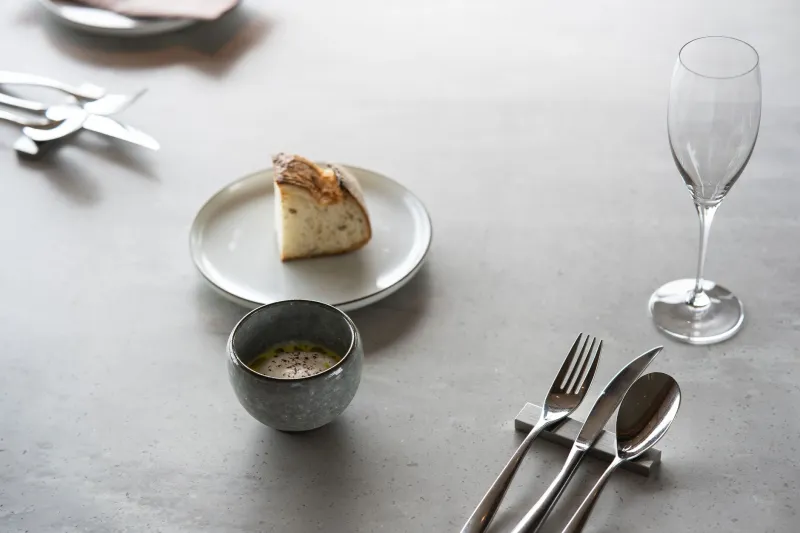
In cities such as San Francisco and Los Angeles, where Japanese entrepreneurial investment in the restaurant sector has grown substantially over the past decade, similar patterns are emerging. Minimalist interior design—a hallmark of Japanese aesthetic sensibility—has replaced the heavier, more ornate visual language traditionally associated with French fine dining rooms. Noise levels are managed more deliberately. Lighting is calibrated with greater attention. The cumulative effect is an environment in which the food and the conversation occupy the foreground, rather than the spectacle of the room itself.
Precision Timing as Competitive Advantage
One of the most operationally significant contributions of Japanese service philosophy to French fine dining is its emphasis on timing as a form of hospitality. In classical French service, timing is managed around the kitchen's capacity and the choreography of the brigade. In omotenashi-influenced establishments, timing is managed around the guest.
This inversion may seem subtle, but its commercial implications are considerable. Guests who feel that a meal has been calibrated to their pace—rather than to the restaurant's operational convenience—consistently report higher satisfaction and demonstrate stronger return visit rates. For Michelin-starred establishments, where the margin between a two-star and three-star assessment often hinges on service as much as cuisine, this distinction carries direct economic weight.
Several operators interviewed by industry observers have noted that the adoption of Japanese-influenced service timing has required significant investment in staff training and kitchen communication systems. The coordination required between front-of-house teams and executive chefs is substantially more complex when course delivery is dynamically adjusted rather than pre-scheduled. However, those who have committed to the model consistently describe the competitive returns as justifying the operational investment.
The Staff Training Imperative
Implementing omotenashi principles within a French fine dining context is not simply a matter of philosophy. It demands a structured approach to staff development that draws on both traditions simultaneously.
Japanese-owned establishments in the US have increasingly developed bilingual or bicultural training programs that introduce front-of-house staff to Japanese service concepts while preserving the technical foundations of classical French service. Sommelier training, tableside preparation techniques, and menu knowledge remain central. But layered on top of these competencies is a more rigorous curriculum around observation, emotional attentiveness, and non-verbal communication.
For Japanese businesses entering the American restaurant market through the French fine dining channel, this training infrastructure represents both a challenge and a differentiator. Building a team capable of executing at this level requires time, investment, and cultural fluency that many operators underestimate. Those who succeed, however, create a service culture that is genuinely difficult for competitors to replicate.
What This Means for the Broader Market
The integration of omotenashi into French Michelin-star restaurant operations is not merely a culinary story. It is a business story—one with direct implications for investors, operators, and professionals active in the French-Japanese commercial sector in the United States.
As American diners become more widely exposed to this hybrid service model, expectations across the broader fine dining category are likely to shift. Establishments that cannot demonstrate a comparable level of attentiveness and personalization may find themselves at a growing disadvantage, regardless of the quality of their cuisine.
For Japanese entrepreneurs and investors evaluating entry points into the American hospitality market, the French fine dining sector offers a particularly compelling opportunity. The infrastructure of classical French cuisine—its training traditions, its supplier relationships, its cultural prestige—provides a robust foundation. The application of omotenashi as an operational differentiator adds a layer of service distinction that the market has not previously encountered at scale.
The fusion being observed in these establishments is not a marketing construct. It is a genuine operational synthesis, and its influence on American fine dining standards appears likely to deepen in the years ahead.
Furansuya Directory tracks the evolving landscape of French-Japanese business activity across the United States. For additional coverage of industry developments in the hospitality and fine dining sectors, explore our Industry Trends archive.